The Assembly of the Unemployed and the Cry of the Xcluded note with grave concern the latest Quarterly Labour Force Survey (QLFS) released by Statistics South Africa for the first quarter of 2026. The report paints a devastating picture of deepening social crisis, economic exclusion and mass despair confronting millions of working-class and poor people across South Africa.
The official unemployment rate has increased to 32,7%, with the number of unemployed people rising by 301 000 in just one quarter to more than 8,1 million people. Employment declined by 345 000 jobs during the same period, while the number of discouraged work-seekers rose sharply to nearly 3,9 million people.
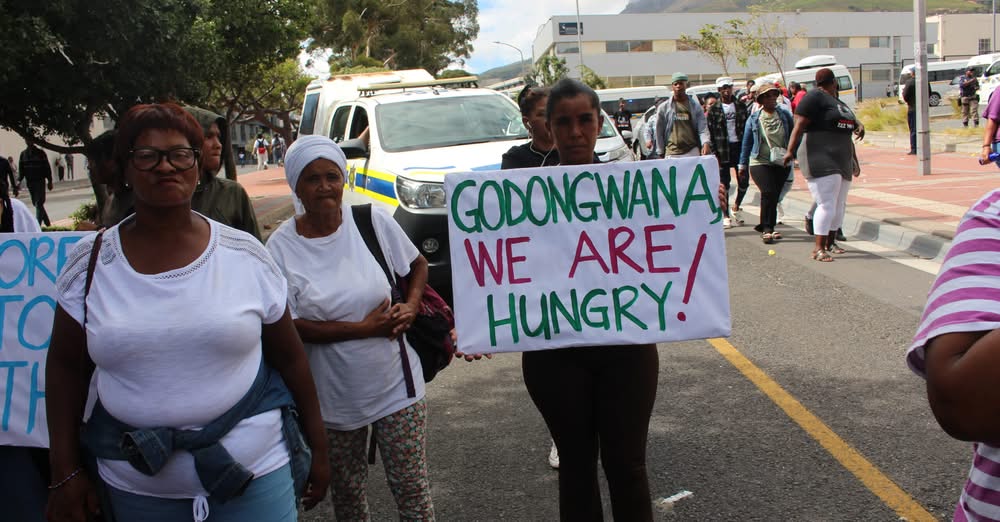
But even these shocking figures do not fully capture the scale of the crisis. The broader measure of labour underutilisation now stands at 46,3%, revealing the true extent of social abandonment and wasted human potential in our society.
For young people, the situation is catastrophic. More than 60% of youth aged 15–24 who are in the labour force are unemployed, while 37,6% of young people are not in employment, education or training (NEET). This is a social emergency that threatens the future of an entire generation.
Women continue to carry a disproportionate burden of this crisis. The unemployment rate for women increased to 36,4%, significantly higher than for men.
The Eastern Cape, Mpumalanga, North West, and other provinces are experiencing unemployment levels comparable to a humanitarian disaster. In the Eastern Cape, the unemployment rate has climbed to 44,6%, while the broader labour underutilisation rate exceeds 57%.
These figures expose the complete failure of the economic path pursued by successive ANC governments over the past three decades. Neoliberal policies centred on austerity, privatisation, fiscal cuts, deregulation and blind faith in “investor confidence” have destroyed jobs, weakened public services and deepened inequality.
At the same time, South African capital has engaged in an ongoing investment strike. Corporations continue to hoard wealth, export profits, automate production and speculate financially while millions are denied the right to decent work and dignity.
Yet instead of confronting these structural causes of unemployment and poverty, opportunist political forces are attempting to redirect the anger of poor communities towards migrants and foreign nationals. In communities devastated by unemployment, rising food prices, collapsing municipal services, electricity crises and government abandonment, anti-immigrant sentiment and xenophobia are being cynically exploited for political gain.
The Assembly of the Unemployed and the Cry of the Xcluded reject this politics of division and scapegoating. Migrants did not cause unemployment. Foreign nationals did not impose austerity. Poor African migrants did not privatise public services, close factories, casualise work or loot public resources. Xenophobia only divides the working class while protecting the real beneficiaries of inequality and exploitation.
The real crisis lies in an economic system that enriches a tiny elite while condemning the majority to unemployment, hunger and insecurity.
We therefore reject the predictable response that will once again emerge from government, the Democratic Alliance and big business — namely that South Africa must simply “attract investment” and create a better climate for corporations. This strategy has failed repeatedly. Decades of tax cuts, labour market flexibilisation and concessions to capital have not produced jobs at the scale required.
South Africa needs a radically different economic strategy centred on people’s needs rather than corporate profits.
The Assembly of the Unemployed calls for:
- An immediate Living Basic Income Grant of at least R1500 per month for all unemployed and economically excluded people.
- The abandonment of neoliberal austerity policies that destroy public services and suppress economic demand.
- A decisive rejection of privatisation and public sector cuts.
- Large-scale state-led investment into productive sectors of the economy.
- A mass public housing programme capable of creating hundreds of thousands of jobs while addressing the housing crisis.
- Massive expansion of affordable public transport.
- Public investment in renewable energy and energy infrastructure.
- Expansion of public healthcare and education systems.
Such an investment programme can create jobs directly, stimulate local manufacturing and economic development, and create conditions that may draw in productive private investment rather than speculative capital.
But while we advance these policy alternatives, we are under no illusion that change will come from above. Thirty years of ANC rule have taught the unemployed and poor to depend on our own organised strength.
We therefore reaffirm the urgent need to build an independent working-class organisation, deepen solidarity within communities, resist austerity and xenophobia, and continue to develop democratic alternatives capable of persuading society that another path is both necessary and possible.
The unemployed are not invisible.
The excluded will organise.
Another economy is possible.
For media comments, please contact:
- Matthews Hlabane on 082 707 9860
- Motsi Khokhoma on 073 490 7623